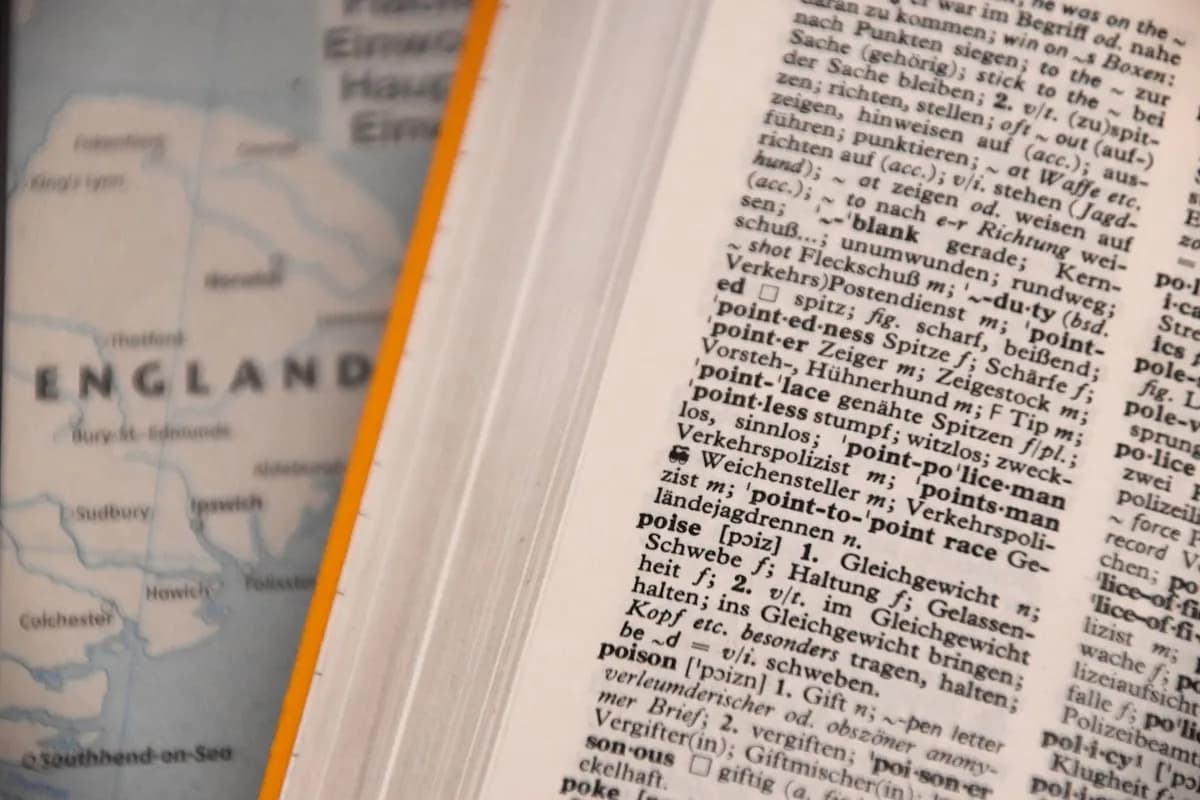
Google's Gemini 3.5 Live Translate launch made multilingual AI feel less like a special feature and more like a baseline expectation. The new audio model translates speech in near real time across 70+ languages, rolls out through Google Translate and Google Meet, and gives developers a public preview through the Gemini Live API.
That is not only a voice product story. It is a customer support story.
When people see AI translate a live conversation while preserving tone and pacing, they start to expect every digital support channel to meet them in their language. A website chatbot that only answers in English, hides language selection in a menu, or routes non-English users to a slower path will feel older fast.
But translation is only the first layer. A customer does not need words converted from one language to another. They need a correct answer, based on the right policy, in the right tone, with a clear path to a human when the situation is sensitive. Multilingual AI support fails when teams treat language as a wrapper around the same old support content.
The opportunity is bigger: use AI translation as the prompt to build support that is truly language-aware.
Translation Is Not Support
Real-time translation removes a major barrier. It does not solve the support workflow.
| Translation can help with | Support still has to solve |
|---|---|
| Detecting the user's language | Knowing which policy applies |
| Rewriting an answer naturally | Grounding the answer in current sources |
| Bridging a live conversation | Escalating to a qualified human |
| Reducing language friction | Tracking quality by language |
| Making global service feel faster | Handling local laws, prices, and exceptions |
This distinction matters because bad multilingual support can look fluent while being wrong. A chatbot can answer in Spanish, French, Arabic, or Japanese and still cite an outdated return policy, skip a regional restriction, or misunderstand a product term that has no clean translation.
That is worse than a clumsy translation. Fluent wrong answers are harder for customers to challenge, and harder for support teams to catch if nobody reviews conversations in that language.
The right question is not "Can our chatbot translate?" It is "Can our chatbot support this customer correctly in their language?"
The New Multilingual Baseline
The timing is important. TLDR's June 10 AI digest put Gemini 3.5 Live Translate beside other major model launches, a useful signal that real-time translation is moving into mainstream AI products, not staying inside specialist tools.
Google Meet is a good signal for business expectations. Its update expands speech translation far beyond a small set of language pairs and brings it into meetings, where customers, partners, contractors, and support teams already work. The Gemini 3.5 Audio model card frames the model around low-latency translation interactions, which is exactly the experience users will compare against slower support channels.
Website support does not need to copy voice translation feature-for-feature. Most support questions on a website are still text first: pricing, setup, shipping, booking, eligibility, refunds, troubleshooting, and account routing. The lesson is expectation, not format.
Users increasingly expect three things:
| Expectation | What it means for website chatbots |
|---|---|
| Automatic language handling | Do not make users hunt for a language selector before they get help |
| Natural responses | Avoid stiff machine-translated text when the customer is asking for practical help |
| Continuity across channels | If the chat escalates, the human should see language, transcript, and context |
Agentkit supports 95+ languages with automatic detection, which covers the first layer. The harder work is operational: making sure sources, policies, handoff, and analytics can carry the language experience without losing accuracy.
Pick the Right Multilingual Surface
Not every support surface needs the same language strategy. A global business might need several at once.
| Surface | Best for | Watch out for |
|---|---|---|
| Website chatbot | Fast answers from public docs and FAQs | Source quality and regional policy conflicts |
| Live chat with translation | High-value or complex conversations | Human workload and transcript accuracy |
| Translated help center | Searchable self-service | Stale translated pages after policy changes |
| Email support | Follow-up, records, complex issues | Slow replies and lost context |
| Voice or video translation | Appointments, field service, travel, healthcare, education | Consent, accents, latency, and domain-specific terms |
A website chatbot is usually the best first multilingual layer because it can answer common questions immediately and collect structured context before escalation. It also creates a feedback loop. Conversation logs show which languages, pages, products, and questions need better source material.
That does not mean the chatbot should replace every channel. If a customer needs account-specific help, a refund exception, legal advice, medical guidance, or a complex sales conversation, the chatbot should route cleanly. Multilingual support is strongest when each channel has a clear job.
For teams starting from zero, begin with the website chatbot and the top language groups already visible in analytics, sales, or support tickets. Then decide which conversations need translated live chat, localized docs, or voice support.
Train From Sources, Not Translations Alone
The fastest way to build a bad multilingual chatbot is to translate a messy knowledge base.
If the English source is outdated, thin, contradictory, or scattered across old PDFs, translation only spreads the problem to more customers. The chatbot training guide starts with the same foundation in any language: crawl the right website pages, upload current documents, use Q&A pairs for exact answers, and remove stale sources.
Multilingual support adds another layer: locale awareness.
| Source problem | Multilingual symptom | Better fix |
|---|---|---|
| One policy page covers several countries | Bot gives the wrong regional answer | Split country-specific policy pages or Q&A pairs |
| Product terms are translated inconsistently | Customer sees different names in chat and docs | Maintain a glossary for product, plan, and legal terms |
| Old translated pages remain indexed | Bot cites outdated local content | Retire stale pages before training |
| English docs are current but local docs lag | Non-English answers are less accurate | Add update ownership for each priority language |
| Support exceptions live in tickets only | Bot cannot answer edge cases | Turn repeated exceptions into reviewed Q&A pairs |
For most teams, the source hierarchy should be simple:
- Current country-specific policy pages.
- Current global product and pricing pages.
- Reviewed Q&A pairs for exact or high-risk answers.
- Clean documents for manuals, setup, contracts, or service details.
- Temporary text snippets for short-lived notices.
Do not make the chatbot infer regional rules from one generic page if the business would not let a human support rep do the same.
Local Policy Beats Fluent Copy
Language is often tied to geography, but not perfectly. A Spanish-speaking customer may be in Mexico, Spain, the United States, or anywhere else. A French-speaking customer may be in France, Canada, Belgium, or a multilingual region where several policy regimes apply.
That means a chatbot should avoid treating language as country.
| User signal | What it can tell you | What it cannot prove |
|---|---|---|
| Browser language | Preferred language | Location, eligibility, tax region |
| Page URL | Localized site section | Customer residency or shipping destination |
| IP location | Approximate geography | Preferred language or account status |
| User-stated country | Claimed context | Verified identity or legal status |
| Account data | Known customer context | Consent to expose private details in chat |
The chatbot can use language to improve the conversation. It should use policy sources, user-confirmed details, or verified account data to answer country-specific questions.
This is especially important for ecommerce, education, healthcare, finance, insurance, travel, and legal services. A translated answer about admissions, coverage, shipping, refunds, taxes, prescriptions, claims, or eligibility may need local conditions. If the source does not support the answer, the bot should say so and route the conversation.
The chatbot hallucination liability guide covers the legal risk of overconfident answers. In multilingual support, the same risk is easier to miss because reviewers may not read every language fluently. The prevention is source design, not just prompt wording.
Handoff Must Carry Language Context
A multilingual chatbot should not hand a customer to a human with a blank slate.
At minimum, the handoff should carry:
- Detected language and any language switch during the conversation.
- Original customer messages.
- Bot responses.
- A short summary in the support team's working language.
- Retrieved source links or policy names.
- The reason for escalation.
- Contact details, only when the customer provided them for follow-up.
This prevents the worst multilingual support experience: the customer explains the problem once in their language, the bot escalates, and the human starts over in another language with no context.
The AI-to-human handoff guide is already clear on the broader rule: escalation is not failure. In multilingual support, escalation is also where trust is either preserved or lost. A clean handoff tells the customer the company understood them, even if automation could not finish the job.
For high-volume teams, add language routing. If a human team member can handle the language, route there. If not, provide translated context and make the limitation visible internally. Do not pretend every agent can support every language equally.
Measure Quality by Language
If multilingual performance is measured only in aggregate, the majority language hides the failures.
Track chatbot quality by language from the beginning.
| Metric | Why it matters |
|---|---|
| Resolution rate by language | Shows whether non-English users get complete answers |
| Escalation rate by language | Reveals where sources or translations are weak |
| Fallback rate by language | Finds languages where the bot says "I do not know" too often |
| CSAT or thumbs feedback by language | Measures whether fluent answers are actually helpful |
| Incorrect-answer reports by language | Catches policy and terminology failures |
| Source gap frequency by language | Tells the content team what to localize next |
| Human rework rate by language | Shows whether handoffs arrive with useful context |
The chatbot KPI reference covers the core support metrics. Multilingual support adds segmentation. A chatbot that resolves 70% of English chats and 28% of German chats is not a 70% resolution chatbot for a German customer. It is a channel with uneven coverage.
Review transcripts in the top languages regularly. If nobody on the team can review a language, use trusted translation for audit, then sample conversations with native speakers or local operators when the stakes are high. You do not need perfect linguistic review for every message, but you do need a way to find repeated failures before customers do.
Roll Out in Layers
Do not launch "all languages everywhere" as one project. Launch multilingual support in layers.
| Stage | Scope | Pass condition |
|---|---|---|
| Language detection | Bot responds in the user's language for low-risk FAQs | Common questions are understandable and sourced |
| Priority languages | Add review for the top 3-5 non-English languages | Resolution and fallback rates are acceptable |
| Locale-specific sources | Add country or region policy pages and Q&A pairs | Bot stops mixing global and local rules |
| Handoff context | Send summaries, language, and sources to humans | Customers do not repeat the conversation |
| Analytics review | Segment metrics by language | Weak languages produce content fixes |
| Channel expansion | Add live chat, email, or voice translation where needed | Each channel has a defined job and owner |
This staged path keeps the project practical. A small business may only need automatic language detection, clean sources, and a reliable contact handoff. A larger support operation may need local policies, language-specific routing, translated help centers, and multilingual QA.
The important part is sequencing. Translation gets users through the door. Source quality, handoff, and measurement decide whether they get support.
The Multilingual Chatbot Checklist
Before treating multilingual support as ready, check the basics.
| Check | Ready when |
|---|---|
| Language detection | The chatbot responds naturally without forcing a selector |
| Source quality | Canonical pages and documents are current |
| Locale rules | Country-specific policies are separated from global guidance |
| Product glossary | Plan names, product terms, and legal phrases are consistent |
| Exact answers | High-risk questions have reviewed Q&A pairs |
| Handoff | Escalations include language, transcript, summary, and source context |
| Metrics | Resolution, fallback, escalation, and feedback are segmented by language |
| Review | Someone audits conversations in priority languages |
| Boundaries | The bot refuses or escalates when sources do not support the answer |
| Expansion | New languages are added based on demand, not wishful coverage |
This checklist is not bureaucracy. It is how you stop multilingual support from becoming a fluent mask over incomplete operations.
The Bottom Line
Gemini 3.5 Live Translate is timely because it changes what customers expect from AI-assisted communication. If real-time translation works in meetings and mobile apps, website visitors will not see language support as a premium novelty for long. They will expect it to be normal.
The teams that benefit will not be the ones that simply translate chatbot replies. They will be the ones that treat language as part of support design: clean sources, local policy boundaries, exact Q&A for risky answers, handoff context, language-level metrics, and a staged rollout. Multilingual AI support needs translation, but it earns trust through everything around the translation.
Agentkit covers the first layer automatically — detection and answers in 95+ languages — so your team's effort goes where this article points: sources, policies, and per-language review.
No credit card required.