Use chatbot abuse detection to group suspicious sessions, score repeated patterns, preserve evidence, and stop misuse without blocking real users.
Use AI agent monitoring metrics for coverage, review latency, escalation, precision, and backlog before oversight falls behind production activity.
Use this AI agent context compaction test plan to catch hidden instructions, lost facts, and deceptive summaries before a long-running workflow resumes.
Answer the questions you know with a static FAQ, use your Agentkit agent for everything else, and continue the same conversation in Center Stage.
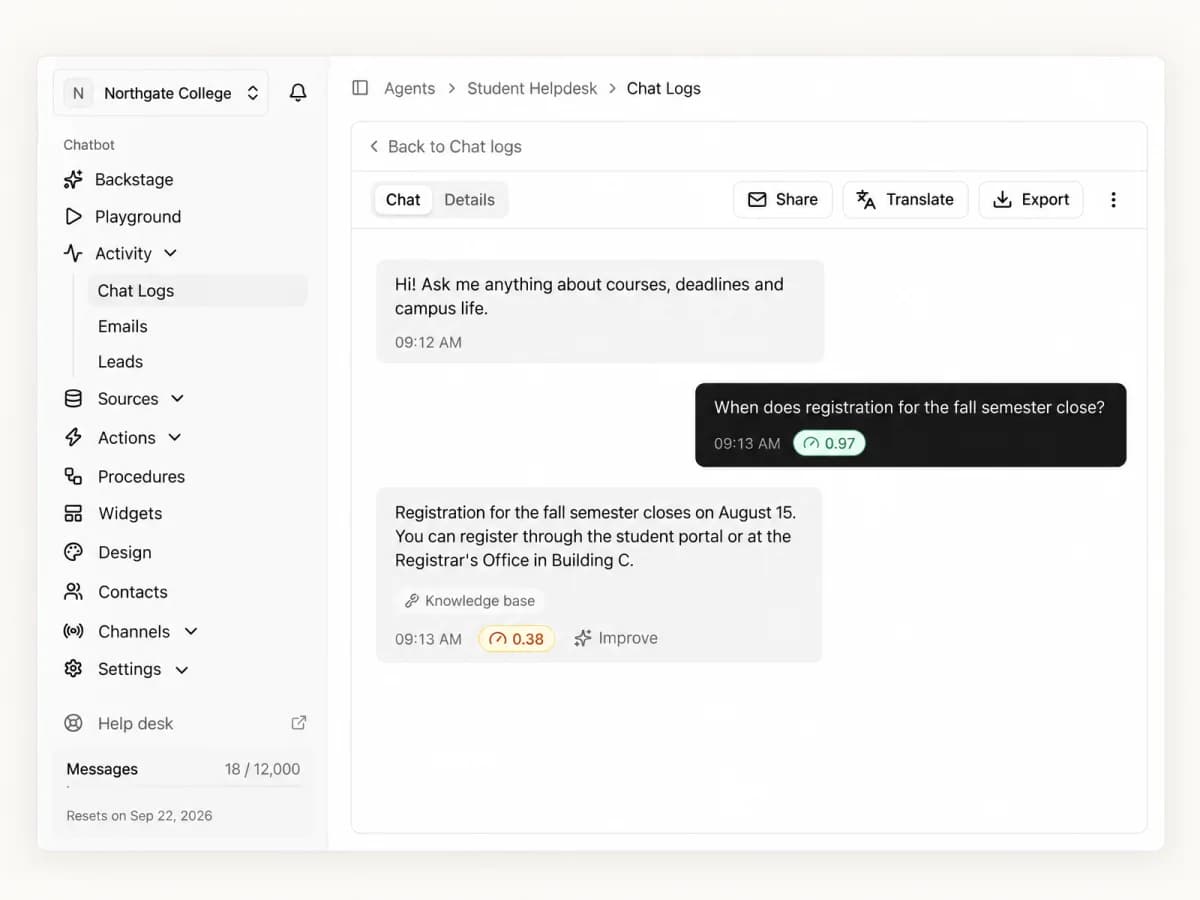
Agentkit now scores every chatbot reply with Jev from TypeSafe, and lets you research and fix a weak answer from Chat Logs in one click.
Use crawl coverage, source evidence and access checks to decide whether a missing RAG source needs a retry, an update or removal.
Compare native speech and STT-LLM-TTS designs with a voice chatbot architecture scorecard for latency, control, testing, and failure recovery.
Improve chatbot tool selection with clear action names, test prompts, and routing rules that stop an AI agent from calling the wrong system.
Use AI agent checkpointing to resume failed workflows without duplicate charges, messages, or record changes. Includes a practical recovery ledger.
Use chatbot conversation analysis to group failures, measure customer impact, trace root causes, and turn support logs into a ranked weekly fix list.
Use this chatbot requirements checklist to capture scope, policies, actions, edge cases, costs, and acceptance tests before development begins.
Use this WebMCP website actions checklist to expose safe AI agent tools with clear effects, server-side authorization, confirmations, and receipts.
Turn video tutorials into reliable chatbot training data with timestamped procedures, visual evidence, version controls, and a practical test set.
Calculate an AI agent supervision ratio from risk, alert load, and operator capacity so concurrent chatbot work never outruns human oversight.
Use this chatbot zero data retention checklist to test provider claims, hidden storage, feature exceptions, audit access, and deletion evidence.
Use chatbot action verification receipts, system checks, and clear failure states to prove customer tasks finished before the bot says they did.
Use chatbot age assurance to choose proportionate checks, safer defaults, limited data collection, and tests that protect minors without blocking adults.
Use this chatbot memory testing playbook to catch stale facts, false recall, bad updates, deletion failures, and cross-customer leaks before launch.
Use this chatbot advertising disclosure checklist to separate sponsored placements from answers, protect user choice, and test paid recommendations.
Use chatbot emotional safety testing to catch distress, unhealthy dependence, unsafe reassurance, and failed human handoffs across long conversations.
Use a voice chatbot transcription testing plan for names, order IDs, addresses, and corrections before speech-to-text errors reach support workflows.
Use chatbot red teaming to automate adversarial tests, measure attack success and false refusals, and block unsafe releases before customers find them.
Use chatbot sycophancy testing to catch false agreement, protect policy answers, and measure whether your bot can correct users without becoming combative.
Use AI agent egress controls to stop chatbot data exfiltration with destination rules, payload limits, redirect checks, monitoring, and kill switches.